

U.S. Waste Management Market to Reach US$ 147.0 Billion by 2032, Growing at a 3.4% CAGR | Persistence Market Research
U.S. Waste Management Market Share and Trends Analysis
Rising waste generation, sustainability initiatives, and expanding recycling infrastructure are driving steady growth in the U.S. waste management industry
BRENTFORD, LONDON, UNITED KINGDOM, March 12, 2026 /EINPresswire.com/ -- The U.S. waste management market plays a critical role in maintaining environmental sustainability, urban sanitation, and efficient resource recovery across the country. Waste management services include the collection, transportation, recycling, treatment, and disposal of various waste streams generated by households, commercial facilities, and industries. With rising urbanization, increasing consumption patterns, and stricter environmental regulations, the demand for organized waste management services continues to grow. Modern waste management systems are gradually shifting toward circular economy principles where recycling, reuse, and energy recovery are prioritized over traditional landfill methods.
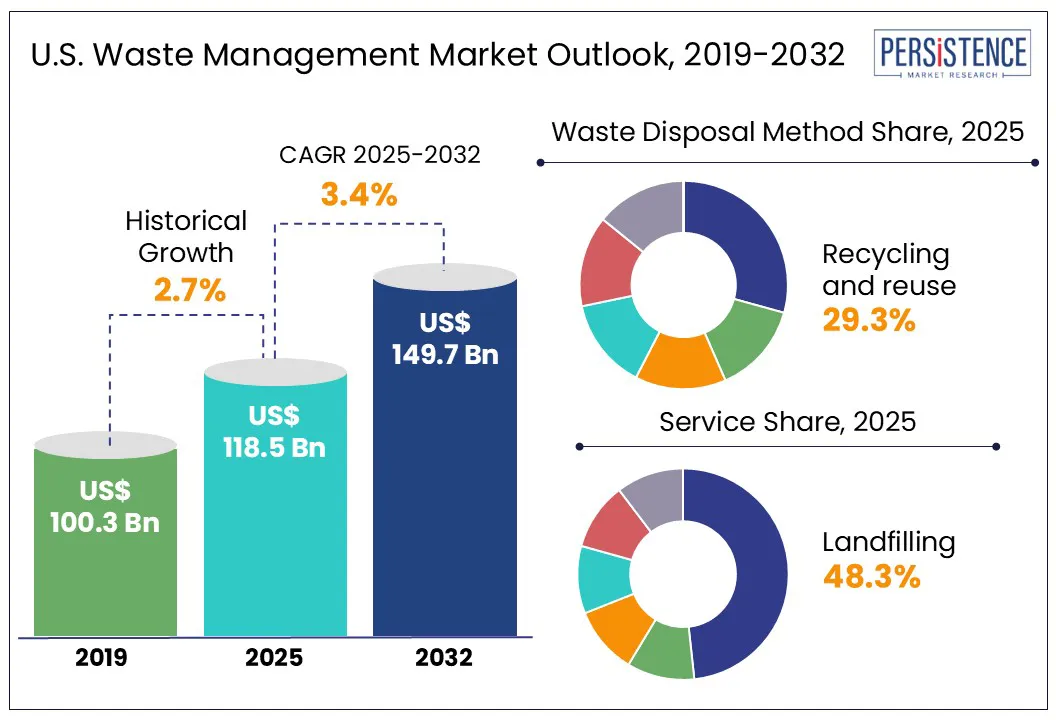
According to Persistence Market Research, the U.S. waste management market size is likely to be valued at US$ 118.5 Bn in 2025 and is expected to reach US$ 147.0 Bn by 2032, growing at a CAGR of 3.4% in the forecast period from 2025 to 2032. Growth is largely supported by increasing waste generation from urban populations, expanding industrial activity, and stronger regulatory frameworks promoting recycling and waste diversion. The municipal solid waste segment remains a leading contributor due to high household waste generation, while recycling services continue to gain traction as businesses and governments focus on sustainability.
Get Free Sample Now: https://www.persistencemarketresearch.com/request-customization/35460
The key players studied in the report include:
• Waste Management Inc
• Republic Services Inc
• Waste Connections Inc
• Clean Harbors Inc
• Casella Waste Systems
• Stericycle
• Covanta Holding Corporation
• US Ecology Inc
• Heritage Crystal Clear Inc
• Recycle Track Systems
• WM Intellectual Property Holdings, LLC.
• Biomedical Waste Solutions
• Vailcor
Key Highlights from the Report
➤ The U.S. waste management market is projected to grow from US$ 118.5 Bn in 2025 to US$ 147.0 Bn by 2032, expanding at a CAGR of 3.4%.
➤ Rising municipal solid waste generation is strengthening demand for efficient waste collection, recycling, and disposal services.
➤ Increasing government regulations aimed at landfill reduction are accelerating recycling and waste recovery initiatives.
➤ Growing investments in smart waste management technologies are improving operational efficiency and sustainability.
➤ Expanding commercial and industrial sectors are contributing significantly to waste management service demand.
➤ Public awareness of environmental sustainability is boosting recycling programs and circular waste management practices.
Market Segmentation
By Waste Type
• Municipal Solid Waste
• Industrial Waste
• Hazardous Waste
• Biomedical Waste
• E-waste
• Agricultural Waste
• Misc.
By Service
• Collection
• Transportation
• Disposal
• Recycling
• Composting
• Waste-to-Energy
By Waste Disposal Method
• Landfilling
• Incineration
• Recycling & Reuse
• Composting
• Anaerobic Digestion
• Pyrolysis and Gasification
By End-use
• Residential
• Commercial
• Industrial
• Healthcare
• Construction & Demolition
• Agriculture
By Region
• Northeast
• Southwest
• West
• Southeast
• Midwest
Request For Customization: https://www.persistencemarketresearch.com/request-customization/35460
Regional Insights
Major metropolitan regions across the United States dominate waste generation due to dense populations, large commercial sectors, and strong industrial activity. Cities with significant economic activity generate vast amounts of municipal and commercial waste, which increases the need for efficient waste collection systems, advanced recycling facilities, and modern disposal infrastructure. Urban municipalities are increasingly investing in smart waste monitoring technologies, automated waste collection, and improved recycling programs to enhance operational efficiency and sustainability outcomes.
Suburban and developing urban regions are also witnessing growing demand for structured waste management services as population expansion and construction activities increase waste volumes. Local governments in these areas are focusing on expanding waste management infrastructure and improving recycling initiatives to reduce landfill dependence. Public-private partnerships are playing a vital role in strengthening waste management capabilities, enabling municipalities to adopt innovative waste treatment technologies and sustainable disposal practices.
Market Drivers
One of the major drivers of the U.S. waste management market is the steady rise in waste generation resulting from population growth, urbanization, and increased consumption. As cities expand and living standards improve, households and businesses generate larger quantities of municipal waste. This surge in waste generation requires efficient collection systems, modern recycling facilities, and environmentally responsible disposal solutions. Governments and private operators are investing heavily in infrastructure to manage waste streams effectively and prevent environmental degradation.
Another strong driver is the growing emphasis on sustainability and environmental protection. Regulatory authorities across the United States are implementing stricter rules regarding landfill use, recycling targets, and waste reduction strategies. Businesses are also adopting corporate sustainability initiatives that focus on waste minimization and recycling. These trends are pushing waste management companies to adopt innovative technologies, such as automated sorting systems and waste-to-energy solutions, to improve operational efficiency and environmental performance.
Market Opportunities
The growing focus on circular economy practices is creating significant opportunities for the U.S. waste management market. Recycling, reuse, and resource recovery initiatives are gaining momentum as governments and organizations attempt to minimize landfill usage and maximize material recovery. Advanced recycling technologies and waste processing innovations are enabling companies to convert waste into valuable resources such as recycled materials, compost, and energy.
Another emerging opportunity lies in the adoption of digital and smart waste management technologies. Smart bins, sensor-based waste monitoring systems, and data-driven waste collection routes are helping operators optimize efficiency and reduce operational costs. These technological advancements improve waste management performance while supporting sustainability goals. As cities continue to adopt smart infrastructure initiatives, the integration of digital waste management solutions is expected to accelerate across municipalities and private service providers.
Buy Now: https://www.persistencemarketresearch.com/checkout/35460
Recent Developments
• January 2024 – Waste Management Inc. announced expansion plans for advanced recycling infrastructure to strengthen sustainable waste processing capabilities.
• September 2023 – Republic Services Inc. introduced new sustainability initiatives focused on increasing recycling efficiency and reducing landfill dependence.
Future Opportunities and Growth Prospects
The future of the U.S. waste management market is closely linked to sustainability initiatives, technological innovation, and stronger environmental policies. As waste generation continues to rise, municipalities and private organizations are expected to prioritize recycling infrastructure, waste-to-energy projects, and smart waste management systems. Increasing awareness about environmental protection and circular economy practices will further encourage responsible waste disposal and resource recovery.
Persistence Market Research
Persistence Market Research Pvt Ltd
+1 646-878-6329
email us here
Visit us on social media:
LinkedIn
Instagram
Facebook
YouTube
X
Legal Disclaimer:
EIN Presswire provides this news content "as is" without warranty of any kind. We do not accept any responsibility or liability for the accuracy, content, images, videos, licenses, completeness, legality, or reliability of the information contained in this article. If you have any complaints or copyright issues related to this article, kindly contact the author above.
