

Emerging Food Allergens Are Outpacing Labels: Food Safety Professionals Urged to Strengthen HACCP Training & Labeling
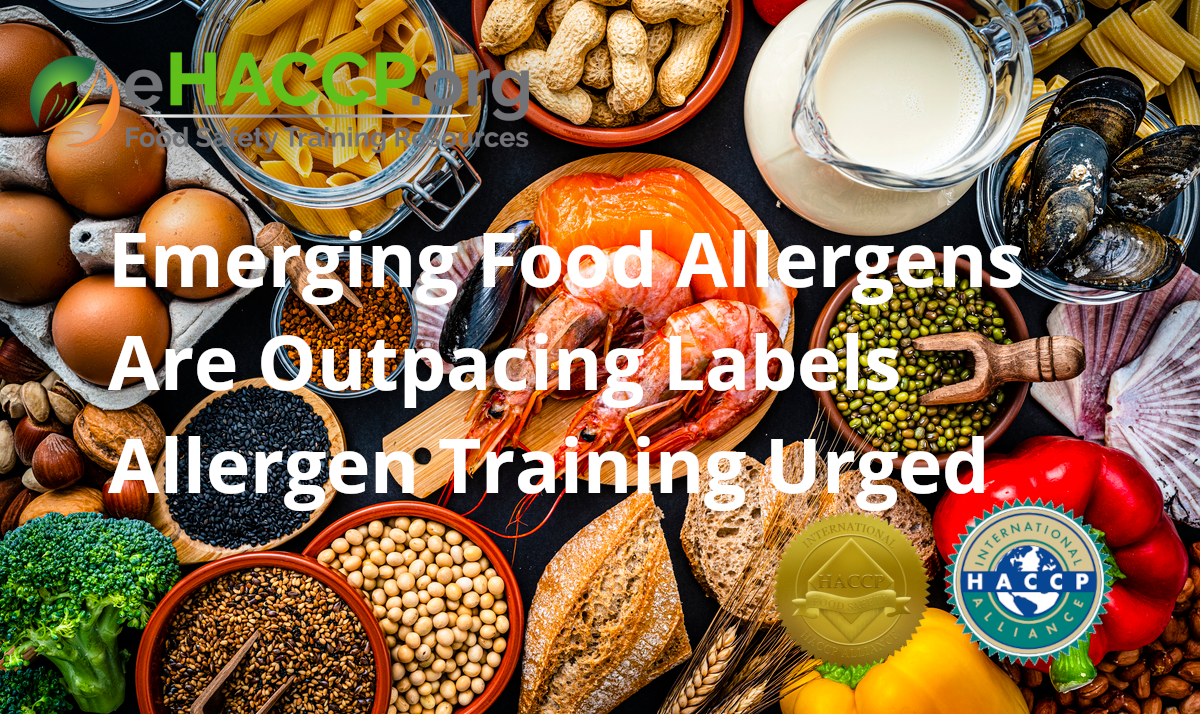
Plant-based proteins, seeds, unexpected fruits & tick-associated alpha-gal syndrome are moving into the allergen spotlight.
The course was well authored and easy to navigate. There is a crazy amount of information they present to you, but it was all very easy to absorb. ”
RHODES CORNER, NS, CANADA, October 14, 2026 /EINPresswire.com/ -- Ask anyone in food production what has changed over the past decade, and the answer usually starts with ingredients. Pea protein in the burger. Chickpea flour in the cracker. Hemp and flax in the granola. Formulations now draw on suppliers from several continents, and the plant-based aisle keeps getting longer. Food allergy has been shifting right along with it. Allergists, researchers, and patient advocacy groups report that more reactions involve foods that were never on the traditional list of major allergens. That leaves food safety teams with a gap between what is in the product and what the label says. Closing it takes a current hazard analysis, people who know what they are doing, and labels that tell the whole story.— James Bavaro
For manufacturers, processors, packers, and foodservice operators, the timing matters. Allergen control used to mean managing a short, fixed list. Now it is an ongoing job that has to keep pace with the science, what people eat, and what regulators expect.
Allergy specialists and researchers, along with news reports on severe anaphylaxis cases, keep coming back to a few groups of foods.
Legumes and pulses. Green peas, lentils, chickpeas, and lupin are causing more reactions. Some are linked to cross-reactivity with peanut. Others come from ingredients that are easy to miss, like pulse flours and protein isolates in meat and dairy alternatives. As pulse proteins become a standard building block for plant-based products, the odds of a surprise exposure go up.
Seeds. Sunflower, pumpkin, chia, hemp, and flax are tied to a growing number of moderate to severe reactions. They turn up in bakery blends, snack bars, cereals and "ancient grain" mixes, often in amounts small enough to slip past a formulation review.
Fruits and vegetables. Kiwi, mango, banana, pineapple, corn and zucchini are appearing more often in the allergy histories of adults and children alike. They are everywhere in purees, smoothies, and sauces, so without a detailed ingredient list, consumers can't easily avoid them.
Pine nuts. Experts who track severe anaphylaxis events have recently flagged them. They show up in pesto, salads, and prepared foods, and the labeling isn't always prominent.
Alpha-gal syndrome. This tick-bite-associated allergy to a molecule found in red meat and other mammal-derived products is on the watchlist, and it is growing with no treatment yet.
Alpha-gal syndrome (AGS) deserves a closer look from food safety teams, because it involves a familiar food in an unfamiliar way. The U.S. National Institutes of Health (NIH) reports about 110,000 suspected cases in the United States since 2010, and says the real number is probably higher because many cases go unrecognized. Symptoms range from stomach trouble to life-threatening anaphylaxis. Reactions to the alpha-gal molecule, found in red meat and other products from mammals, are often delayed, making it hard for people to figure out what set them off.
NIH researchers have now reported a promising finding. Scientists at the National Institute of Allergy and Infectious Diseases (NIAID), working with collaborators, identified rare antibodies that acted as a kind of biological shield in laboratory tests, stopping the allergic antibodies of AGS patients from binding to red meat allergens. The antibodies were first isolated during malaria research. Of 42 alpha-gal-specific antibodies studied, 13 bound to allergens linked to AGS. Two of those blocked IgE from patients with AGS from attaching to certain allergens, and one interfered with the activation of basophils, immune cells involved in allergic reactions. The work was published in the Journal of Clinical Investigation.
"Tick bite-associated cases of AGS are increasing in the U.S. and globally, and there is currently no specific treatment or prevention for it other than avoiding red meat," said John Powers, M.D., acting director of NIAID. He called the discovery a first step toward preventing AGS and developing targeted therapies.
Peter Crompton, M.D., a lead author and senior investigator at NIAID, said, "This discovery is also a remarkable example of how collaborative global health research can lead to breakthroughs that improve the health and well-being of Americans." The team, which was also led by Scott Commins, M.D., Ph.D., at the University of North Carolina at Chapel Hill, says the findings could lead to studies aimed at finding more antibodies that work against a wider range of alpha-gal allergens.
For the food industry, the takeaway is simple. This is an early step, not a therapy anyone can get today. Until that changes, people with AGS rely on avoidance, and avoidance relies on accurate information about what is in their food. Whether a product falls under the U.S. Department of Agriculture (meat, poultry, and egg products) or the U.S. Food and Drug Administration (the wide range of mammal-derived ingredients in other foods), the facility is responsible for knowing what is in it and saying so.
While federal frameworks place allergen control at the core of food safety, statutory mandates lack absolute thresholds. Under the Food Allergen Labeling and Consumer Protection Act (FALCPA)—broadened by the FASTER Act—the FDA regulates nine major food allergens: milk, eggs, fish, crustacean shellfish, tree nuts, peanuts, wheat, soybeans, and sesame. Manufacturers under FDA jurisdiction must declare these ingredients using clear, accessible language. Furthermore, the Food Safety Modernization Act (FSMA) Preventive Controls rule (21 CFR Part 117) requires facilities to conduct rigorous hazard analyses and implement strict preventive controls targeting cross-contact, labeling errors, and sanitation deficits. Despite this multi-layered oversight, undeclared allergens continue to drive a high volume of recalls across both FDA-regulated goods and USDA Food Safety and Inspection Service (FSIS)-monitored meat and poultry products.
The list of nine reflects prevalence and severity at the time it was set. It was never meant to capture every ingredient that can send someone to the hospital. Peas, lentils, chickpeas, lupin, sunflower and other seeds, pine nuts and mammalian products that carry alpha-gal are not on it, yet they are real hazards for the people who react to them. A facility that stops at the legal nine can be fully compliant on paper and still put customers at risk.
Precautionary allergen labeling remains voluntary in the United States, and it does not replace good manufacturing practices or effective allergen controls. Waiting for formal rule changes is a gamble, and allergic consumers are the ones who pay if it goes wrong.
Many businesses that supply major retailers, foodservice distributors, and global brands are certified to a scheme benchmarked by the Global Food Safety Initiative (GFSI), such as SQF, BRCGS, FSSC 22000, IFS, or PrimusGFS. These schemes require documented, risk-based allergen management, and auditors routinely ask how a site identifies allergens, controls cross-contact, validates cleaning, verifies supplier declarations, and makes sure labels match formulations.
Because the schemes are built on risk assessment, they reward sites that look past the legal minimum. A facility that can show its hazard analysis considered emerging allergens, that it has looked at cross-contact from pulse flours and seed ingredients, and that it has checked what its suppliers declare is in a better spot at audit time. It is also better prepared for customer questions and for whatever rule changes come next.
What can facilities do? Food safety professionals can get ahead of this without waiting for anyone's permission. Seven steps are a good place to start.
Update the hazard analysis. Review HACCP plans, food safety plans, and allergen programs so they cover emerging allergens, not only the nine in federal law. Look hard at pulse flours, seed ingredients, plant-based protein blends, and mammal-derived ingredients that matter for alpha-gal. Write down the reasoning behind each decision, including why an ingredient is or is not treated as an allergen hazard at your site.
Invest in accredited training. Production, quality assurance, purchasing, receiving, sanitation, and maintenance all shape allergen outcomes. Training should cover cross-reactivity, hidden ingredient sources, cross-contact pathways, rework, and how formulation changes connect to label changes. Programs accredited by the International HACCP Alliance (IHA) give employers and auditors confidence that the training meets a recognized standard. Online providers such as eHACCP.org, which offers IHA-accredited HACCP training, let teams across shifts and locations build the same foundation without pulling large groups off the floor at once.
Tighten supplier verification. Ask for detailed ingredient specifications and allergen declarations so you can trace plant-derived flours, protein isolates, seed ingredients, and animal-derived components. Ask suppliers directly about emerging allergens and how they manage cross-contact in their own plants. Check the answers through audits and document review, not questionnaires alone.
Label with transparency. Where an emerging allergen is an ingredient, consider declarations that go beyond the minimum. Where cross-contact is a real and unavoidable risk, use precautionary statements that have been validated. They should come out of an actual risk assessment and not act as a blanket disclaimer, because overuse erodes trust and shrinks the choices available to people with allergies.
Revisit changeover and sanitation validation. Confirm that cleaning works against a wider range of allergen proteins, use suitable verification methods, and reassess whenever new ingredients, equipment, or product lines arrive. Changeovers between plant-based and conventional products deserve extra attention, since pulse and seed proteins can be fine, sticky, and easily spread.
Tie labels to formulation control. Many allergen recalls trace back to a label that did not match the product, often after a formulation change, a supplier substitution, or a packaging mix-up. Build change-control procedures that trigger a label review whenever a formulation or supplier changes, and document label checks at packaging.
Rehearse the recall. Keep a traceability and recall plan and test it. A facility that can identify affected lots in hours instead of days protects consumers and limits the damage to the business.
"The allergen landscape is not static, and our controls cannot be either," said Stephen Sockett, eHACCP.org. "With no treatment for conditions like alpha-gal syndrome, avoidance is the only protection consumers have, and it only works if the label tells the whole story. Facilities that build emerging allergens into their HACCP planning and labeling practices today will protect consumers, reduce recall risk, and demonstrate leadership in food safety."
Testing, technology, and paperwork all matter, but allergen control comes down to people. A well-written allergen plan fails when a receiving clerk does not recognize a new ingredient, when a line operator does not see why a changeover step cannot be skipped, or when a buyer approves a substitute supplier without asking about allergens. HACCP training turns hazard analysis, critical control points, monitoring, verification, and record-keeping into habits people share.
It also gives departments a common language. When quality, operations and purchasing all understand how an allergen hazard is found and controlled, decisions about ingredients, scheduling, cleaning and labeling get more consistent and easier to defend. For sites answering to FDA, USDA FSIS or a GFSI scheme, that consistency is what auditors and inspectors look for.
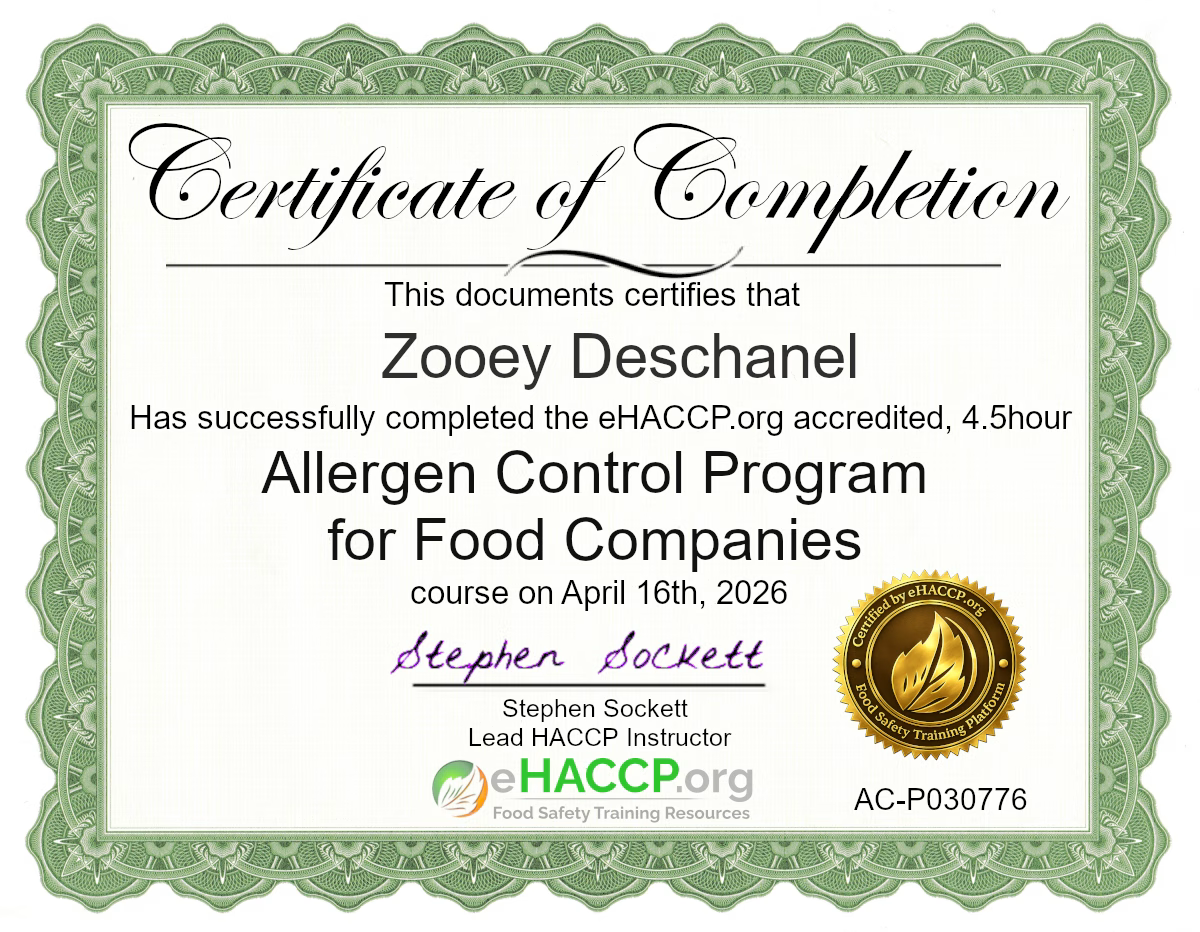
For facilities that want to turn these recommendations into a working system, eHACCP.org offers an online Allergen Control Program (ACP) for Food Companies course. It takes about 4.5 hours, is self-paced, and walks through creating, implementing, and maintaining an allergen control program step by step. It is designed to help facilities meet FDA requirements under FSMA for allergen control and cross-contamination prevention; it incorporates FALCPA content and addresses expectations from GFSI-recognized standards.
Participants learn to document the program, set allergen requirements, run a facility risk assessment, build an allergen inventory and registry, approve suppliers, and verify and validate program effectiveness. The course comes with ready-to-use documents, including a supplier allergen questionnaire, spill response and incident report forms, changeover and ingredient substitution logs, label approval and internal audit checklists, a hidden allergens chart, an equipment color-coding guide, and a major allergens poster.
The course is narrated and interactive, SCORM-compliant, and includes live support, one year of access, and a digital certificate. Registration is $199. eHACCP.org states that its courses meet FDA, FSIS/USDA, PCQI, and GFSI HACCP training requirements. Details are at ehaccp.org/allergen-control-program.
Allergen risk is widening; the regulations set a minimum, and consumers rely on food professionals to close what is left. A great "To-Do" is for food safety leaders to schedule an allergen hazard review, confirm their teams have current HACCP training from an accredited provider, audit supplier declarations, and read their own labels the way an allergic customer would.
The organizations that move first will protect the most people, avoid the most expensive incidents, and earn the most trust.
Sources: U.S. National Institutes of Health / NIAID, findings published in the Journal of Clinical Investigation; U.S. Food and Drug Administration (FALCPA, FASTER Act, FSMA Preventive Controls for Human Food); U.S. Department of Agriculture, Food Safety and Inspection Service; Global Food Safety Initiative; International HACCP Alliance; media reporting on emerging allergens.
Stephen Sockett
eHACCP.org
+19023437763 ext.
Visit us on social media:
LinkedIn
Facebook
YouTube
X
Other
Legal Disclaimer:
EIN Presswire provides this news content "as is" without warranty of any kind. We do not accept any responsibility or liability for the accuracy, content, images, videos, licenses, completeness, legality, or reliability of the information contained in this article. If you have any complaints or copyright issues related to this article, kindly contact the author above.
